Few companies in history have delivered the kind of sustained returns that Apple Inc. has generated for shareholders over the past decade. When investors examine the stock price Apple computer trajectory, they find a story built on product discipline, ecosystem lock-in, and relentless cash generation. As of Q1 2026, Apple's market capitalization sits at approximately $2.5 trillion, making it one of the largest publicly traded companies on the planet. Yet many retail investors still hesitate, assuming the easy gains are behind them. That assumption deserves serious scrutiny. The combination of expanding services revenue, hardware refresh cycles, and emerging technology bets creates a growth profile that the headline valuation alone does not fully capture. Before writing off Apple as a mature, slow-moving giant, it pays to look closely at what is actually driving the numbers.
How the Stock Price Apple Computer Has Evolved Over Time
Apple's shares have not always been the reliable wealth-builders they appear today. Through the early 2000s, the company traded as a niche personal computer maker with a devoted but limited customer base. The launch of the iPhone in 2007 changed the trajectory permanently, shifting Apple from a hardware company into a platform business. Investors who recognized that shift early captured extraordinary returns.
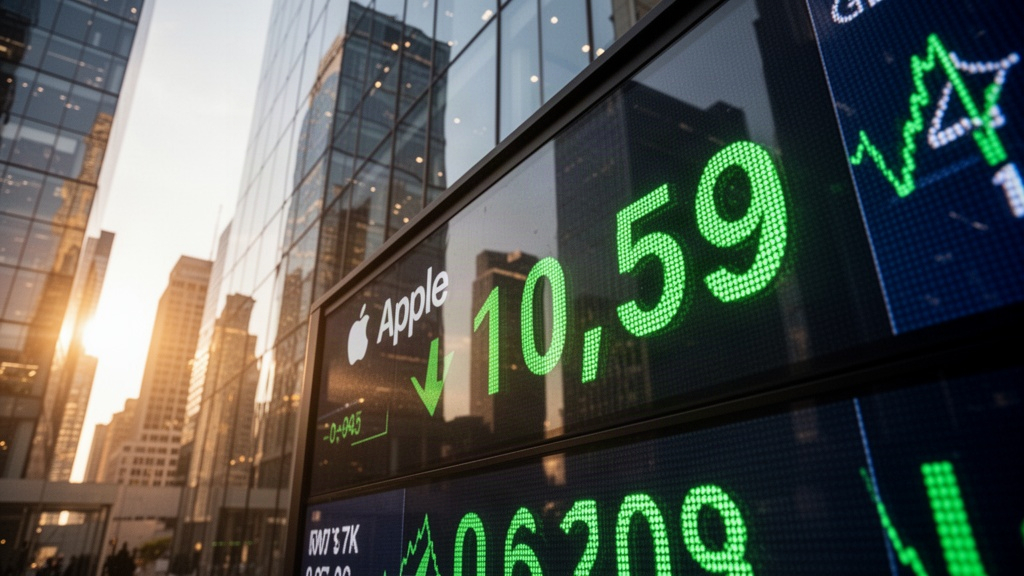
Over the last five years alone, Apple's stock price has increased by approximately 150%. That figure places it well ahead of the broader S&P 500 over the same period, and it reflects more than simple market enthusiasm. Each major product cycle, from the M-series chip transition to the rollout of spatial computing hardware, has reinforced investor confidence that the company can sustain premium pricing and margin expansion simultaneously.
Trading on the NASDAQ under the ticker AAPL, Apple has also benefited from consistent share buyback programs. The company has repurchased hundreds of billions of dollars in its own stock over the past decade, mechanically reducing share count and lifting earnings per share even in quarters where net income growth was modest. This financial engineering is not a substitute for organic growth, but it meaningfully amplifies returns for long-term holders.
The SEC requires Apple to disclose its buyback activity in quarterly filings, and those filings reveal a management team that treats capital allocation with unusual seriousness. When free cash flow is strong and the stock trades below management's estimate of intrinsic value, buybacks accelerate. That discipline has compounded favorably over time. Investors who track historical price data through sources like Yahoo Finance can see how these repurchase windows have consistently supported the share price during broader market corrections, creating a partial floor that purely cyclical businesses simply cannot replicate.
Factors Driving Growth in Apple's Stock Value
Multiple structural forces are pushing Apple's valuation higher, and they operate across different time horizons. Some are already generating revenue today; others are still in early stages but carry significant long-term weight.
The services segment deserves particular attention. Revenue from the App Store, Apple Music, iCloud, Apple TV+, and Apple Pay has grown faster than hardware sales for several consecutive years. Services carry gross margins well above 70%, compared to roughly 37% for products. As the services mix rises within total revenue, blended margins expand, and that expansion flows directly into earnings.
The core drivers behind Apple's stock price appreciation include:
- Ecosystem stickiness: Once users own multiple Apple devices and subscribe to Apple services, switching costs become genuinely prohibitive for most households
- Pricing power: Apple raises average selling prices on iPhones year over year without triggering significant volume declines, a rare ability in consumer electronics
- Geographic expansion: Penetration in India and Southeast Asia is still in early innings, representing hundreds of millions of potential new customers
- Apple Silicon performance: The M-series chip architecture has widened the performance gap with competing laptops, driving Mac upgrade cycles among professional users
Beyond these operational factors, Apple benefits from its status as a benchmark holding in institutional portfolios worldwide. Index funds tracking the S&P 500 or NASDAQ-100 must hold AAPL in proportion to its weighting. As passive investment flows grow, demand for Apple shares increases mechanically regardless of short-term earnings volatility. That structural bid supports the stock in ways that smaller companies simply do not enjoy.
The artificial intelligence integration announced across Apple's product lines also opens a new monetization layer. On-device AI features tied to premium hardware and subscription tiers could meaningfully lift average revenue per user over the next several years, without requiring Apple to win the AI infrastructure race outright.
Reading the Market Trends That Shape Apple's Outlook
The broader technology sector in early 2026 is navigating a complex environment. Interest rate expectations, geopolitical supply chain pressures, and shifting consumer spending patterns all create headwinds that affect even the strongest balance sheets. Apple is not immune to macro forces, and investors should avoid treating it as a risk-free asset.
That said, several macro trends work in Apple's favor. The global smartphone upgrade cycle, which slowed sharply during the post-pandemic normalization period, shows signs of reaccelerating. Carriers in North America and Europe are again offering aggressive trade-in subsidies to push 5G adoption, which directly benefits premium handset makers. Apple, with the largest installed base of older iPhones in the world, stands to capture a disproportionate share of those upgrades.
Wearables and health technology represent another expanding front. The Apple Watch has moved from a lifestyle accessory toward a regulated health monitoring device, with features covering heart rhythm detection, blood oxygen measurement, and crash detection. Regulatory approvals for additional health sensors would accelerate this trajectory and open entirely new revenue streams tied to healthcare partnerships and insurance products.
Analysts at MarketWatch and other financial publications have repeatedly flagged the potential for Apple to grow its financial services footprint. Apple Card, Apple Pay Later, and related products position the company inside the daily financial lives of hundreds of millions of users. The data advantage this creates, combined with the trust consumers place in the Apple brand, gives the company leverage that traditional banks and fintech startups struggle to replicate.
Supply chain diversification away from sole dependence on Chinese manufacturing is a multi-year project, but progress is visible. Expanded production in India and Vietnam reduces geopolitical concentration risk, which institutional investors have flagged as a concern since 2022. As that risk diminishes, one historical discount on Apple's valuation narrows.
What Investors Should Weigh Before Buying Apple Shares
Valuation always matters, even for high-quality businesses. Apple's price-to-earnings ratio trades at a premium to the broader market, reflecting the quality of its earnings and the predictability of its cash flows. Investors paying that premium need to be comfortable with the assumption that growth continues at a pace that justifies the multiple. If services revenue growth decelerates or a major product cycle disappoints, the stock can correct sharply even without any fundamental deterioration in the underlying business.
Diversification discipline applies here as much as anywhere. Apple's weight in major index funds means many investors already hold significant exposure without realizing it. Adding individual shares on top of index fund holdings concentrates technology and consumer discretionary risk in ways that deserve explicit acknowledgment rather than passive acceptance.
The SEC mandates that all publicly traded companies, including Apple, disclose material risks in their annual 10-K filings. Reading those disclosures is not optional for serious investors. Apple's filings consistently highlight regulatory risk in the European Union, antitrust scrutiny of the App Store, and the competitive threat from Android ecosystem improvements. These are real risks, not boilerplate language.
Position sizing relative to overall portfolio goals is a practical consideration that often gets lost in the excitement around a strong-performing stock. A long-term investor with a 10-year horizon can tolerate more short-term volatility than someone approaching retirement. Dollar-cost averaging into AAPL over time, rather than making a single large purchase, reduces the timing risk that comes with buying any individual stock at a moment of elevated market sentiment.
One often-overlooked angle: Apple's dividend yield is modest by income investing standards, but the company has raised its dividend consistently for over a decade. Combined with buybacks, total shareholder return significantly exceeds what the yield alone suggests. Investors focused purely on yield metrics may underestimate the full return profile that Apple delivers to patient, long-term holders.