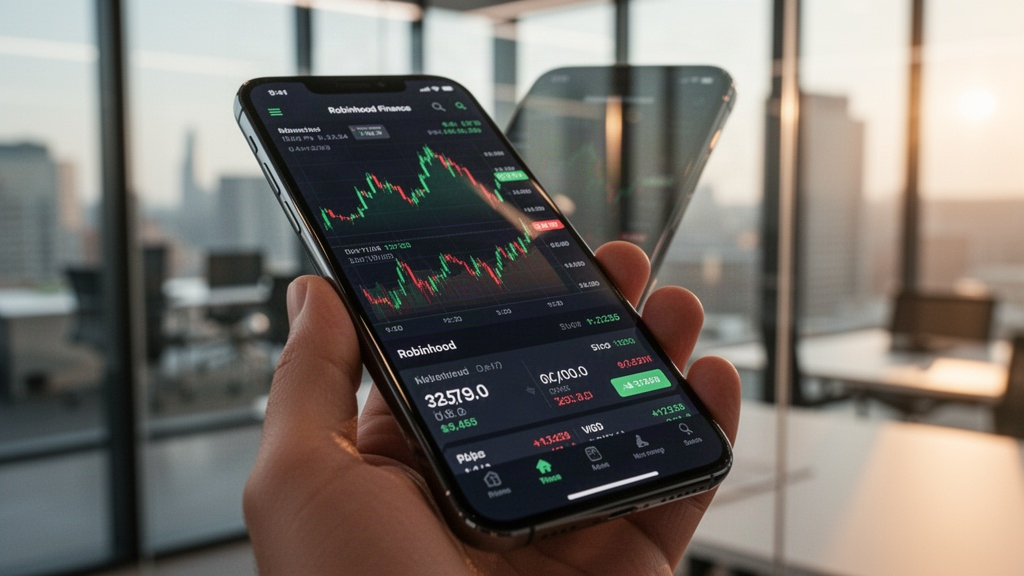
Robinhood finance has reshaped how millions of Americans approach investing. What started as a simple commission-free trading app has grown into a full-scale financial platform with ambitions that extend well beyond stock trading. With over 15 million active users and a demographic skewed heavily toward younger investors, Robinhood occupies a unique position in the fintech sector. Whether you are a seasoned trader or someone who has never bought a single share, understanding how this platform operates in its current form matters. The decisions Robinhood makes — on fees, features, and regulatory compliance — ripple across retail investing broadly. Here are five things every investor and business professional should understand about this platform right now.
How Robinhood Finance Disrupted Retail Investing
When Robinhood Markets, Inc. launched its zero-commission model, most established brokerages charged between $5 and $10 per trade. That pricing structure effectively discouraged small investors from participating actively in markets. Robinhood eliminated that barrier entirely, and within a few years, competitors including Charles Schwab, Fidelity, and TD Ameritrade were forced to drop their own commissions to zero. One platform changed an industry-wide pricing norm in under five years.
The business model behind this apparent generosity is payment for order flow (PFOF), a practice where market makers pay Robinhood to route customer orders through them. The Securities and Exchange Commission (SEC) has scrutinized this arrangement repeatedly, arguing it may not always result in the best execution price for retail traders. Robinhood has defended the model, pointing to the net savings customers receive by avoiding commissions altogether.
This disruption extends beyond pricing. Robinhood introduced fractional shares, allowing users to invest as little as $1 in companies like Apple or Amazon that trade at hundreds of dollars per share. That single feature opened equity markets to people who previously had no practical way to build a diversified portfolio. The psychological shift this created — investing as an everyday habit rather than a quarterly event — has had lasting effects on how retail participation in markets is measured and discussed.
The platform's mobile-first design also deserves attention. Traditional brokerage interfaces were built for desktop users comfortable with dense data. Robinhood stripped that back to a clean, gesture-driven experience that prioritized speed over complexity. That design philosophy attracted a generation of users who expect financial tools to work like social media apps, not like spreadsheets.
Key Features That Set the Platform Apart
Robinhood's feature set has expanded considerably from its original stock-trading roots. Understanding what the platform actually offers today helps separate its genuine strengths from the marketing narrative that often surrounds it.
- Commission-free trading on stocks, ETFs, and options remains the platform's defining characteristic, with no per-contract fees on options trades
- Cryptocurrency trading is available directly within the app, covering assets like Bitcoin, Ethereum, and a range of altcoins without requiring a separate exchange account
- Robinhood Gold, the premium subscription tier, provides access to margin trading, larger instant deposits, and research reports from Morningstar at a flat monthly fee
- Robinhood Retirement offers individual retirement accounts (IRAs) with a matching contribution on eligible deposits, a feature rarely seen outside employer-sponsored plans
- Cash management accounts with competitive interest rates on uninvested cash, effectively functioning as a hybrid between a brokerage and a savings account
The retirement product deserves particular attention for business-minded investors. A 1% match on IRA contributions — or 3% for Gold subscribers — is a meaningful incentive that directly competes with what some small employers offer through workplace plans. For self-employed individuals or freelancers without access to employer benefits, this changes the calculus on where to hold retirement savings.
Options trading on Robinhood has attracted both praise and criticism. The platform made options contracts accessible to beginners who previously had no straightforward way to trade derivatives. The Financial Industry Regulatory Authority (FINRA) has examined whether Robinhood's approval process for options trading adequately assessed user sophistication. The platform has since added more educational prompts and suitability checks, though debates about appropriate access continue.
Who Actually Uses Robinhood and Why It Matters for Business
Around 50% of Robinhood's user base is under the age of 35, which makes it the dominant retail brokerage among millennials and Gen Z investors. That demographic concentration is not just a marketing footnote — it has real implications for how markets behave and how businesses communicate with shareholders.
Younger investors on Robinhood tend to concentrate their portfolios in individual stocks and thematic bets rather than diversified index funds. This behavior contributed to the meme stock phenomenon seen with companies like GameStop and AMC, where coordinated retail buying through platforms like Robinhood created short squeezes that temporarily overwhelmed institutional short sellers. Businesses with significant retail investor bases now monitor sentiment on social platforms specifically because of how quickly that sentiment can translate into trading volume.
For companies seeking investor relations strategies, the rise of Robinhood-style retail investing means that clear, accessible communication about earnings and corporate direction matters more than it did a decade ago. Retail investors on these platforms react to headlines and social media posts in ways that institutional investors typically do not. A poorly worded press release can move a stock price through retail reaction before analysts have had time to publish a note.
The platform has also surfaced a new class of first-time investors who entered markets during the 2020-2021 period of heightened retail activity. Many of these users have stayed engaged, building habits around regular investment that were previously uncommon in their age cohort. That sustained engagement means Robinhood's user base is gradually maturing, with growing demand for more sophisticated tools and products.
Navigating the Regulatory Environment
The regulatory scrutiny facing Robinhood has been consistent and at times severe. In 2021, the SEC fined Robinhood $65 million for failing to adequately disclose its payment for order flow arrangements to customers. FINRA imposed a separate $57 million fine alongside $12.6 million in restitution for a range of violations including misleading customers about margin trading risks. These are not minor compliance footnotes — they reflect systemic issues the company has had to address at an operational level.
The broader regulatory debate around payment for order flow remains unresolved. The SEC has proposed rules that would require brokerages to route orders through competitive auctions rather than directly to market makers, which would fundamentally alter Robinhood's revenue model. The outcome of that regulatory process will determine whether the commission-free model remains economically viable in its current form or requires restructuring.
Cryptocurrency regulation adds another layer of complexity. Robinhood's crypto trading features operate under a patchwork of state and federal rules that are still taking shape. The platform has had to navigate state-level money transmission licenses while federal agencies debate jurisdiction over digital assets. Businesses that hold or trade crypto as part of treasury management face similar regulatory uncertainty, making Robinhood's experience a useful case study in how fintech companies manage compliance under ambiguous legal frameworks.
Staying current with SEC and FINRA guidance is not optional for any firm operating in this space. Robinhood's compliance history shows that even platforms with strong brand recognition and large user bases face material financial consequences when regulatory standards are not met proactively.
What the Platform's Evolution Signals for the Fintech Sector
Robinhood's trajectory over the past several years tells a broader story about where consumer fintech is heading. The company has moved from a single-product disruptor to a multi-product financial services firm competing across banking, retirement, and trading simultaneously. That shift mirrors what other fintech players including SoFi and Chime have pursued, as each tries to become the primary financial relationship for its user base rather than a supplementary tool.
The economics of this expansion are demanding. Building out banking infrastructure, securing necessary licenses, and managing customer service at scale requires capital and operational discipline that pure-play trading apps never needed. Robinhood's ability to execute across these categories while maintaining its low-cost positioning will determine whether it sustains growth or hits the ceiling that has stalled other fintech challengers.
For business professionals watching the fintech space, Robinhood's product decisions offer a real-time signal of where retail financial behavior is moving. When the platform adds a feature — retirement matching, crypto staking, extended trading hours — it is typically responding to demonstrated user demand. Tracking those additions is a practical way to understand what younger investors prioritize and how traditional financial institutions will eventually need to respond to retain their own customer bases.
The platform's international ambitions also bear watching. Robinhood has begun expanding beyond the United States, testing services in select markets. Each new geography brings distinct regulatory requirements and competitive dynamics, and the scalability of Robinhood's model outside its home market remains an open question that will shape its long-term business profile considerably.